

Does Magnetic Charging Work Through A Phone Case?
Yes, Phone cases should have no impact on magnetic charging. As long as the phone case is thin enough (typically less than 3 mm), made of non-metallic material, and ideally compatible with MagSafe. Additionally, standard ultra-thin phone cases can also charge your phone. However, MagSafe cases with built-in magnets ensure your phone stays securely attached, charges quickly, and doesn’t overheat.
How Magnetic Wireless Charging Technology Works
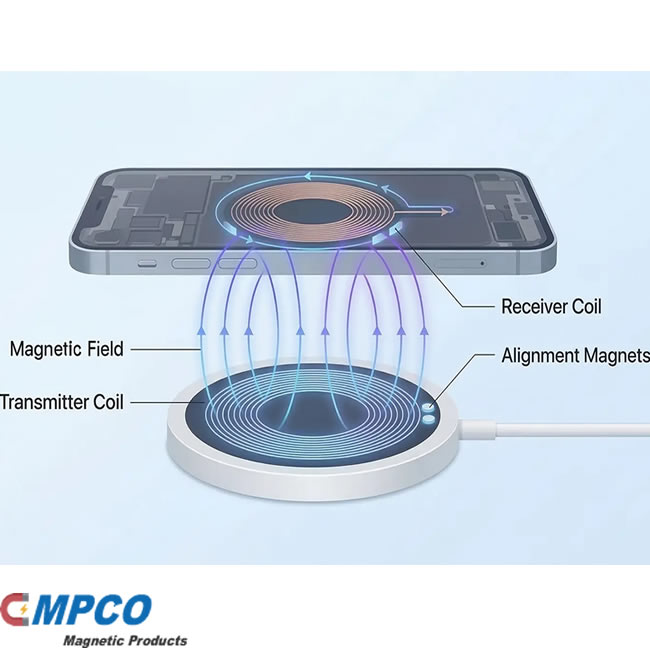
The principle of magnetic wireless charging involves the interaction between electromagnetic fields and coils within devices. This technology has made charging more convenient by eliminating the need for cables.
Magnetic Alignment
It can ensure that the transmitter (the charging base) and the receiver (the phone) are properly aligned, allowing for maximum energy transfer. This alignment is achieved through magnets that guide the phone into the correct position on the charging base.
Charging Coils Explained
A wireless charger’s charging base contains an electromagnetic coil that generates a magnetic field when an electric current flows through it. Phones compatible with wireless charging have a corresponding coil that captures this magnetic field, converting it into electrical energy to charge the battery.
Power Transfer Through Different Distances
The distance between the charging base and the phone’s coil significantly affects the efficiency of power transfer. Generally, the closer the coils are to each other, the more efficient the energy transfer will be. Thicker phone cases or other obstructions can increase this distance, potentially reducing charging efficiency.
Does Magnetic Charging Work Through A Phone Case
What Are the Benefits of MagSafe Cases?
Using the best MagSafe case instead of a normal one has several useful benefits:
Strong Magnetic Attachment: Things like wallets, mounts, and stands stick together well.
Better Alignment: The magnets make sure that your wireless charger attaches properly.
Modular Ecosystem: It’s easy to change out or snap on accessories.
Reliable Charging Through the Case: Charging via the case works every time, so you don’t lose speed or accuracy.
Better Compatibility with Accessories: No need for metal add-ons or sticky rings.
Sleeker Integration: The magnets are incorporated in, not tacked on top.
What Factors in Phone Cases Affect Wireless Charging?
Phone cases can affect wireless charging. If the case is too thick, it may prevent proper charging. The thickness and material of the case play a crucial role in whether magnetic charging can proceed smoothly.
To help you better understand, let’s explore the factors that affect wireless charging with phone cases:
Case Thickness
The thickness of a phone case is a critical factor in determining its compatibility with magnetic charging. Generally, thinner cases are more likely to be compatible. Most magnetic charging systems can handle cases with a thickness of up to 3mm without significant issues.
Case Thickness / Power Transfer Through Different Distances
Material Composition
The type of material used in your phone case can significantly impact the efficiency of magnetic charging. Different materials have varying effects on the magnetic field, influencing the charging performance. For a deeper breakdown of how each material performs, see our phone case material guide.
Material
Magnetic Charging Compatibility
Reason
Silicone and TPU Cases
Compatible
These materials are flexible and do not significantly interfere with magnetic fields. This type of phone case is very thin and does not obstruct energy transmission.
Plastic and Polycarbonate Cases
Generally compatible(Not too thick)
These materials are lightweight and non-magnetic. As long as the phone case isn’t too thick, it won’t affect the performance of magnetic charging.
Leather and Fabric Cases
Generally compatible
If the leather or fabric phone case is thin enough and contains no metal components, it can be compatible with magnetic charging. Thicker leather cases may reduce charging efficiency.
Metal Cases and Magnetic Interference
Not compatible
Metal is an excellent magnetic field shielding material. When used in phone cases, it completely blocks the energy transfer between the charger and the phone.
Built-in Magnets
Some phone cases come with built-in magnets that are designed to work with magnetic charging systems. The presence and alignment of these magnets can significantly improve charging efficiency. Cases without built-in magnets rely on the phone’s internal magnetic charging capability.
How to Choose a Phone Case That Works with Magnetic Charging?
If you wish to use MagSafe charging, choose an ultra-thin phone case less than 3 millimeters thick. The case material should ideally be non-metallic, such as TPU, polycarbonate, or leather, and include built-in magnets.
In addition, make sure it says “MagSafe Compatible” on it to make sure it lines up correctly and charges quickly. You can make your selection based on the following aspects:
Integrated Magnets (MagSafe): Look for cases that have a magnetic ring built into the back. This makes sure that the charger lines up exactly for the best performance.
Optimal Thickness: The best thickness for cases is 3mm or less. Very thin cases are best, although high-quality, slightly thicker casings with strong, built-in magnets can also function well.
Material Matters: Silicone, TPU (thermoplastic polyurethane), polycarbonate, and leather are the ideal materials since they let electromagnetic energy pass through easily.
Avoid Metal Components: Avoid using phone cases with metal components. The magnetic properties of metal can interfere with or significantly reduce wireless charging efficiency.
In addition, excess heat during wireless charging can throttle charging speed and degrade your battery over time. If overheating is a recurring issue, a case designed for better heat dissipation can make a measurable difference.
