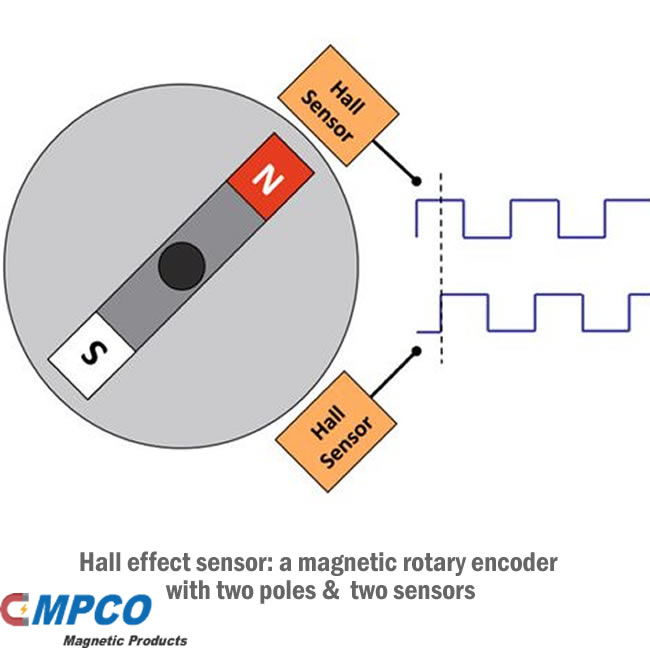
Magnetism

/Tag:Magnetism
  • Understanding Resolution in Optical and Magnetic Encoders

Understanding Resolution in Optical and Magnetic Encoders

Understanding Resolution in Optical and Magnetic Encoders How the different types of rotary encoders work and what differentiates the performance of the many types available today. Rotary encoders are devices that convert rotary movement or angular position into analogue or digital signals for use within measurement or control systems. They can be classified in a [...]
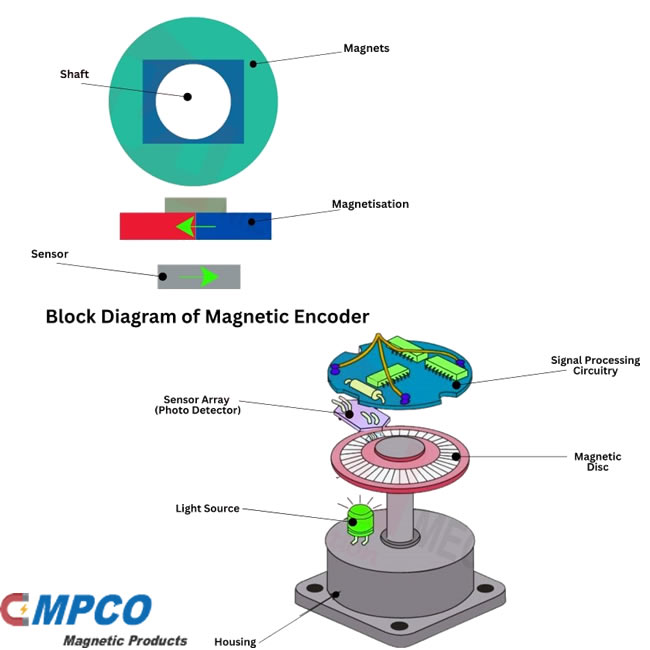

  • Comprehensive Guide on Magnetic Encoder

Comprehensive Guide on Magnetic Encoder

Comprehensive Guide on Magnetic Encoder A magnetic encoder is an electromechanical device which converts motion into digital signals using a magnetic field. It provides feedback about position, speed, and direction to the controller. In today’s modern world of automation, position accuracy and feedback are important to ensure accuracy and reliability in every performance. This positional [...]

  • Linear Motor Magnetic Assembly Guide

Linear Motor Magnetic Assembly Guide

Linear Motor Magnetic Assembly Guide A Linear Motor Magnetic Assembly is an important magnetic component in a permanent magnet linear motor. It usually consists of multiple NdFeB magnets arranged according to a specific magnetic pole arrangement, pole pitch, and magnetization direction. The magnets are assembled with a steel back iron, yoke, or other support structures [...]

  • Top 15 SmCo Magnets Manufacturers in the World

Top 15 SmCo Magnets Manufacturers in the World

Top 15 SmCo Magnets Manufacturers in the World If someone asks for the strongest possible permanent magnet, SmCo is rarely my first answer. If the same customer says the magnet will sit next to a hot motor winding, work downhole, or hold a stable field for years with very little drift, the conversation changes. That [...]

  • What Are the Differences Between Sm1Co5 and Sm2Co17 Magnets

What Are the Differences Between Sm1Co5 and Sm2Co17 Magnets

What Are the Differences Between Sm1Co5 and Sm2Co17 Magnets There are two options of magnet which are commonly used in high-temperature motors or the aerospace manufacturing: Sm1Co5 and Sm2Co17. Both of them are samarium-cobalt magnet (SmCo), which is a type of rare-earth magnet. The number in the name represented the atomic ratio between samarium (Sm) [...]

  • How Does Temperature Affect SmCo Magnets?

How Does Temperature Affect SmCo Magnets?

How Does Temperature Affect SmCo Magnets? Samarium cobalt (SmCo) magnets are a type of rare earth magnet known for their exceptional magnetic strength, high resistance to demagnetization, and stability across a wide range of temperatures. Unlike neodymium magnets, which tend to lose strength at higher temperatures, samarium cobalt magnets retain their magnetic properties remarkably well, [...]

  • Magnetic Domains Understanding the Foundation of Magnetism

Magnetic Domains: Understanding the Foundation of Magnetism

Magnetic Domains: Understanding the Foundation of Magnetism Magnetic domains are the foundation of magnetism. In this post we’ll dive into the world of magnetic domains, and explore how they form, behave and the processes that determine their impact on magnetic materials. Understanding these will give you a deeper appreciation of how magnetism works in everyday [...]

  • Magnet Glossary

Magnet Glossary

Magnet Glossary A Air Gap An air gap is non-magnetic material present between a magnet and an attracted object or between two magnets attracting each other. It acts as a break in the magnetic circuit, weakening the magnetic hold. The air gap can be filled with air, wood, plastic, aluminum, paint, or any uneven surface. [...]

  • Neodymium Magnet Glossary

Neodymium Magnet Glossary

Neodymium Magnet Glossary Welcome to our comprehensive glossary of neodymium magnets. As a leading supplier of high-quality magnets, we understand the importance of having a solid grasp of magnet terminology. Whether you're an industry professional, a hobbyist, or simply curious about the fascinating world of magnets, our glossary is designed to provide you with clear [...]

  • How to Make Magnetic Slime

How to Make Magnetic Slime

How to Make Magnetic Slime Put a twist on the classic slime science project by making magnetic slime. This is slime that reacts to a strong magnetic field, like a ferrofluid, but it's easier to control. It's easy to make, too. Here is what you do: Magnetic Slime Materials white school glue (e.g., Elmer's glue) [...]

  • How to Make Liquid Magnets

How to Make Liquid Magnets

How to Make Liquid Magnets A liquid magnet, or ferrofluid, is a colloidal mixture of magnetic particles (~10 nm in diameter) in a liquid carrier. When no external magnetic field is present, the fluid is not magnetic and the orientation of the magnetite particles is random. However, when an external magnetic field is applied, the [...]

  • The Science of Magnetic Field Lines

The Science of Magnetic Field Lines

The Science of Magnetic Field Lines A magnetic field surrounds any electric charge in motion. The magnetic field is continuous and invisible, but its strength and orientation may be represented by magnetic field lines. Ideally, magnetic field lines or magnetic flux lines show the strength and orientation of a magnetic field. The representation is useful [...]

error: Content is protected !!