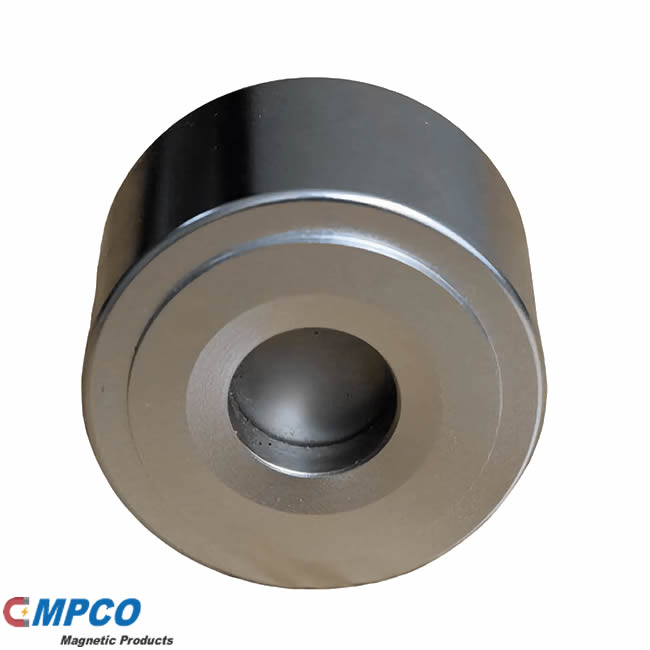
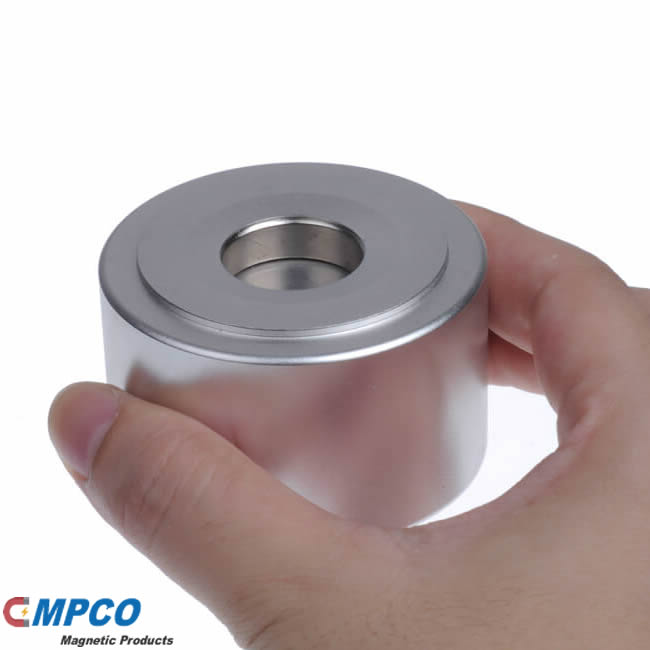
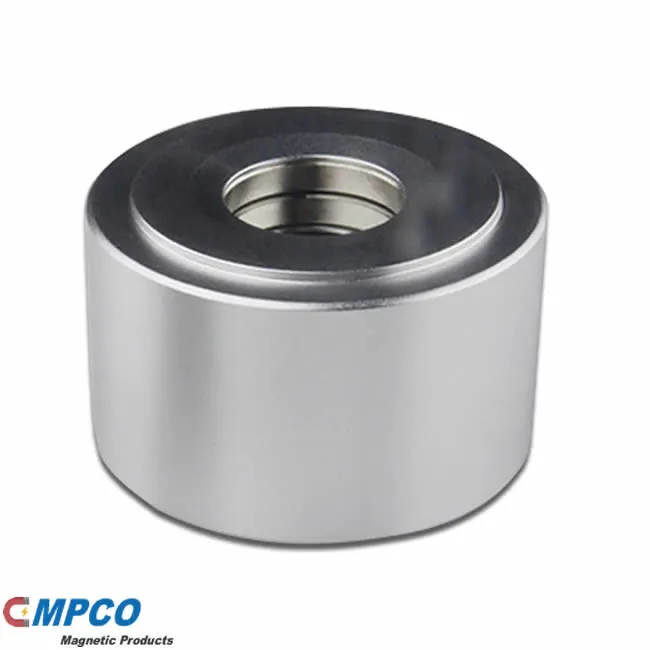
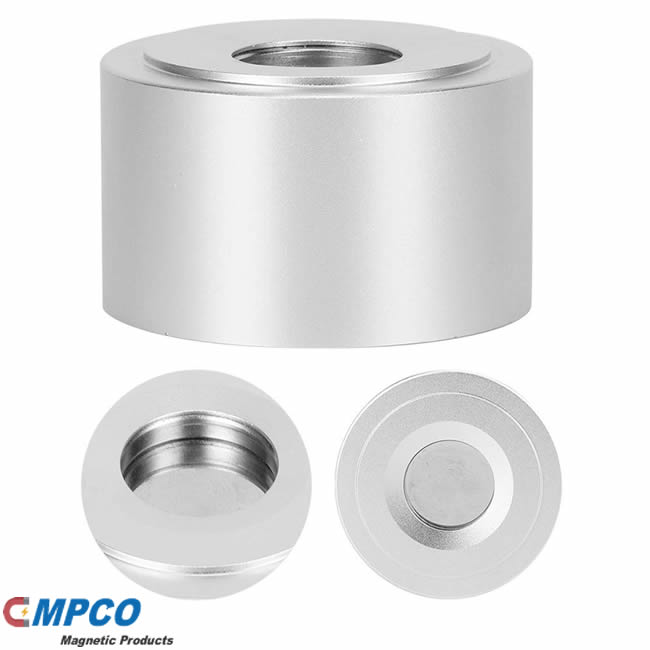
Ball Joint Magnet Assembly K625

/Ball Joint Magnet Assembly K625
  • Ball Joint Magnet Assembly K625
Primary Competitive Advantages:
  • We are A Professional Permanent Magnets & Magnetic Assemblies Company Operating Since 2004
  • All Magnetic Grade for Sintered & Bonded Magnets
  • Our Quality Guaranteed
  • We Ship Worldwide
  • Small Orders Accepted
  • OEM Design Approvals
  • All Payment Accepted
  • Ball Joint Magnet Assembly K625 Chrome or Brass Plated, Magnetic Ball and Socket Joint, Magnetic Ball Joints for 3D Printer, Permanent NdFeB Magnetic Ball Joint Assembly, Magnetic Pole Position, Magnetic Universal Joint China Supplier

    Ball Joint Magnet Assembly K625 DETAILS
    Grade: K625 (Chrome or Brass plated)
    Measurement:-
    Cylinder Diameter: 20mm
    Cylinder Height: 25mm
    Ball Diameter: 25mm
    Holding Force: ~17kgs
    Material: Steel Shell or Brass House, Strong Neodymium Magnets
    Operating temperature: Max. 100 °C
    Tolerances: KL/GL ± 0,5 mm D Ø ground, tolerance h6 (Exception Type K8) otherwise general toleranz ± 0,1 mm
    All dimensions in mm
    Special designs possible:
    All-round galvanic or nickle plating
    units with max. operating temperature of 200 °C.

    Ball Joint Magnet Assembly – The invention relates to a magnetic ball joint comprising two pivotally interconnected hinge members of which a first hinge part is formed by a sphere and the other, second hinge part is provided with a recess in which the ball is rotatable, wherein the ball exclusively force-locked is held in the second hinge portion and made of magnetic material and the second hinge part comprises a permanent magnet which attracts the ball and comprises a magnetic yoke that increases the magnetic attraction of the ball. permanent magnetic ball joints k418

    A robot which is provided with such a ball joint is known from GB 2289002 A. In this known robot the ball of the pivot is drawn in the recess by a permanent magnet. If the force between the two hinge parts exceeds a certain limit, the ball is drawn against the magnetic attraction out of the recess and the parts to which the hinge parts are attached become separate. The ball joint is therefore as a security device wherein in case of overload no or at least less damage can occur. A disadvantage of this known ball joint is that the hinge parts already separate from each other at relatively low forces. This could be resolved by the application of a stronger permanent magnet. However, by this, the hinge is more costly and/or the weight and the size of the joint increases, which is undesirable in case of use in a robot in which the parts are subject to high accelerations and decelerations.

    Magnetic Joint Ball Dimension

    Magnetic Joint Ball Dimension

    TypeK Ø
    (Ball)
    D Ø
    (Magnet)
    KLLGGLIGIGLBall with inner thread
    M 4/3,5 mm deep without
    thread IG on the rear
    K88,012,5 ± 0,0518,012,0––––Holding force10,0 N(1,0 kp)
    K31010,010,028,020,0M312,0M35,0Holding force18,0 N(1,8 kp)
    K31212,010,030,520,0M312,0M35,0Holding force18,0 N(1,8 kp)
    K41313,013,031,020,0M412,0M46,0Holding force40,0 N(4,0 kp)
    K41818,013,036,020,0M412,0M46,0Holding force40,0 N(4,0 kp)
    K51616,016,034,020,0M412,0ohne–Holding force70,0 N(7,0 kp)
    K62525,020,047,025,0M516,0M55,0Holding force150,0 N(15,0 kp)
    K72525,025,056,035,0M516,0M57,0Holding force200,0 N(20,0 kp)
    error: Content is protected !!