Bonded NdFeB

//Bonded NdFeB
  • All About Magnetisation Directions

All About Magnetisation Directions

All About Magnetisation Directions What is Magnetisation Direction? The magnetisation direction refers to the direction of the magnetic flux between the north and south poles of a magnet. This determines the magnetic field lines between the poles of a magnet. It may be difficult to visualise the magnetisation direction, so referring to a magnetic field [...]

  • Coercivity by Magnet Type

Coercivity by Magnet Type

Coercivity by Magnet Type Introduction to Magnetic Coercivity Coercivity (coercive force), determines how well a magnet can resist external forces that would cause it to lose its magnetic properties. The forces that can demagnetise, or degauss a permanent magnet include; temperature, alternating currents and kinetic force. High coercivity is necessary for magnets that will be [...]

  • Which Coatings Magnets are Available

Which Coatings Magnets are Available?

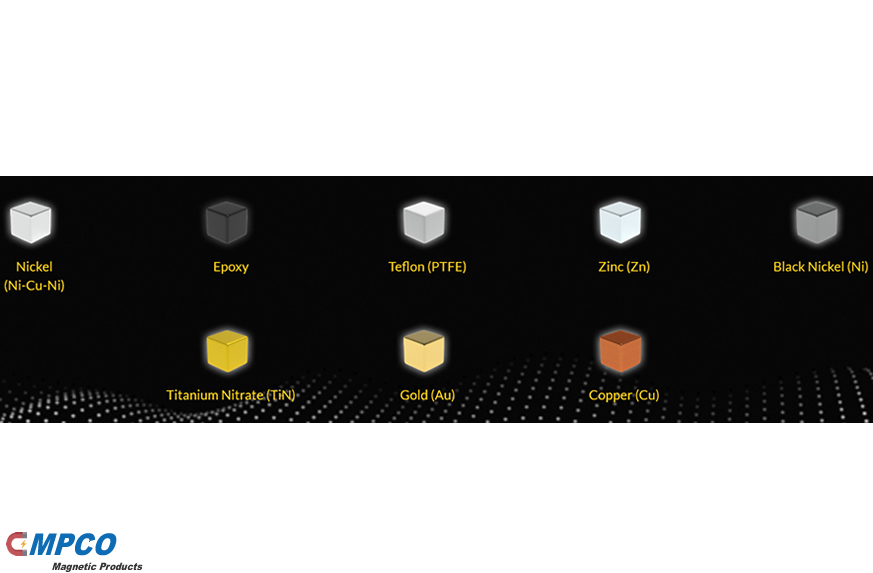
Which Coatings Magnets are Available? There are many types of coatings available and each one has their own unique properties and uses for different applications. Nickel (Ni-Cu-Ni) Epoxy Teflon (PTFE) Zinc (Zn) Black Nickel (Ni) Titanium Nitrate (TiN) Gold (Au) Copper (Cu) Which Coatings Magnets are Available Nickel-Copper-Nickel (Ni-Cu-Ni) Coated Magnets Ni-Cu-Ni is [...]

  • What Shape and Size Magnets are Available

What Shape and Size Magnets are Available?

What Shape and Size Magnets are Available? Available Magnet Shapes Permanent magnets come in a huge variety of shapes and each has its own unique benefits. The geometry of a rare earth magnet determines how the magnetic field lines are arranged from the north pole to the south pole, so the shape of the magnet [...]

  • Neodymiun Button Magnets

Neodymiun Button Magnets

Neodymiun Button Magnets A button magnet is a type of magnet that is shaped like a small, flat button. Button magnets are typically made of materials such as neodymium, samarium-cobalt, or ferrite, and they can be found in a wide range of sizes and shapes. They are often used in a variety of applications, including [...]

  • How to Detect The Magnetic Pole Pairs of Brushless Motors

How to Detect The Magnetic Pole Pairs of Brushless Motors?

How to Detect The Magnetic Pole Pairs of Brushless Motors? The magnetic pole pairs of brushless motors are mainly detected by the changes in the magnetic field of the rotor poles. The rotor magnets (magnetic steel) are arranged alternately in N and S poles. When the brushless motor Hall detects that the magnet jumps from [...]

  • How to Choose the Magnet Used Inside Brushless Motor

How to Choose the Magnet Used Inside Brushless Motor?

How to Choose the Magnet Used Inside Brushless Motor? Brushless motors are a type of motor commonly used in many applications, and magnets are one of their key components. The choice of magnets has a significant impact on the performance, efficiency and stability of the motor. Here are some factors to consider when selecting magnets [...]

  • How Are Rotor Magnets Arranged in a Brushless Motor

How Are Rotor Magnets Arranged in a Brushless Motor?

How Are Rotor Magnets Arranged in a Brushless Motor? Brushless motors are a common type of electric motor that is driven by the rotor through an internal brushless electronic controller. The rotor magnet arrangement inside a brushless motor is one of the key design elements and usually includes one or more permanent magnet steel poles. [...]

  • Temperature Condition for Brushless Motor MagnetsTemperature Condition for Brushless Motor Magnets

Temperature Condition for Brushless Motor Magnets

Temperature Condition for Brushless Motor Magnets Brushless motors use permanent magnet as one of their key components. These magnets usually use high-performance permanent magnet materials, such as rare earth neodymium strong magnets, mainly arc-shaped, fan-shaped, wedge-shaped, and rectangular. Today, this article mainly introduces the temperature requirements of brushless (DC) motor magnets. In general, the temperature [...]

  • Type And Advantage of Magnets In Electric Motors

Type And Advantage of Magnets In Electric Motors

Type And Advantage of Magnets In Electric Motors We all know that magnets are commonly used on motors, but the magnets used by different motors are not only different sizes, but also different shapes. The basic shapes are arc/wedge/bread-shaped, rectangle, ring and flat (plane) shapes, Let's talk about their respective characteristics. First, Motor arc magnets [...]

  • Why Are There No Magnets on The Rotor of a Washing Machine Motor

Why Are There No Magnets on The Rotor of a Washing Machine Motor?

Why Are There No Magnets on The Rotor of a Washing Machine Motor? Just in the GOOGLE statistics to see the website keyword search source, see a netizen put forward the washing machine motor rotor why there is no magnet of this problem, the following magnet supplier MPCO to briefly introduce you. Washing machine motors [...]

  • How to Safely Install Strong Magnet in the Motor Rotor During Assembly

How to Safely Install Strong Magnet in the Motor Rotor During Assembly

How to Safely Install Strong Magnet in the Motor Rotor During Assembly Motor rotor in the assembly process, there is a process is to load the core magnet, some from the slot inserted into the rotor inside, some affixed to the inner surface of the rotor, some affixed to the outer surface of the rotor, [...]

error: Content is protected !!