• Application of Permanent Magnet Motors in Elevator Traction Machines

Application of Permanent Magnet Motors in Elevator Traction Machines

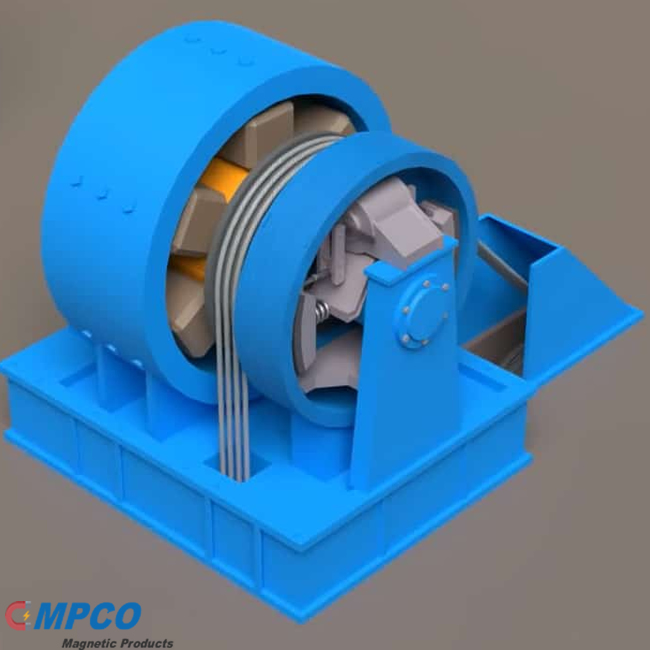
Application of Permanent Magnet Motors in Elevator Traction Machines In the elevator industry, the use of permanent magnet (PM) motors in traction machines represents a significant technological advancement. These motors offer numerous benefits, including improved efficiency, compact design, and lower maintenance costs, which are crucial for modern elevator systems. This blog explores the application of [...]
  • Common Testing Methods for Sintered NdFeB Magnets

Common Testing Methods for Sintered NdFeB Magnets

Common Testing Methods for Sintered NdFeB Magnets Sintered neodymium-iron-boron (NdFeB) magnets are widely used in modern technology and industry, such as electric vehicles, wind turbines, and consumer electronics, due to their excellent magnetic properties. To ensure their reliability and performance in various applications, comprehensive testing is necessary. Newland Magnet has a series of professional magnet [...]

  • Magnetic Circuit Design and Arrangement in Modern Technology

Magnetic Circuit Design and Arrangement in Modern Technology

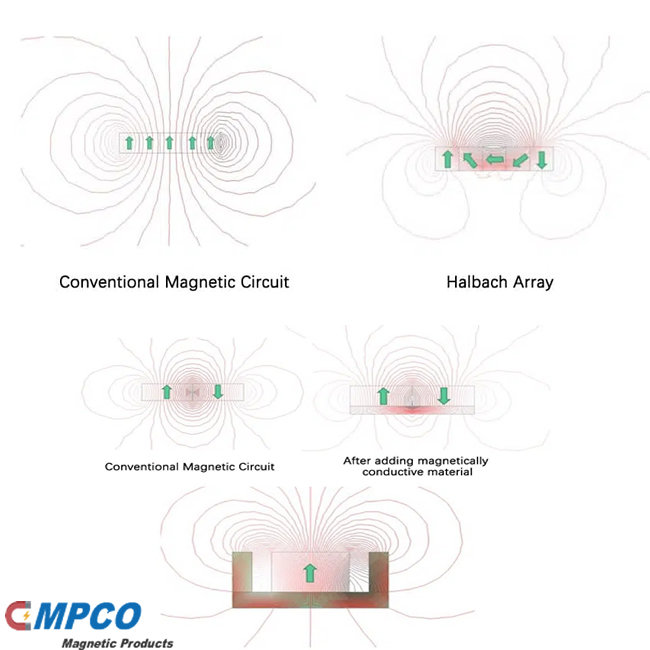
Magnetic Circuit Design and Arrangement in Modern Technology In modern technology, the design and arrangement of magnetic circuits are crucial to the performance of devices. The application scenarios are diverse and complex, making it challenging to meet the usage requirements with a single magnet. Additionally, when rare earth prices are high, the volume and amount [...]

  • Non-contact Magnetic Disc Coupling

Non-contact Magnetic Disc Coupling

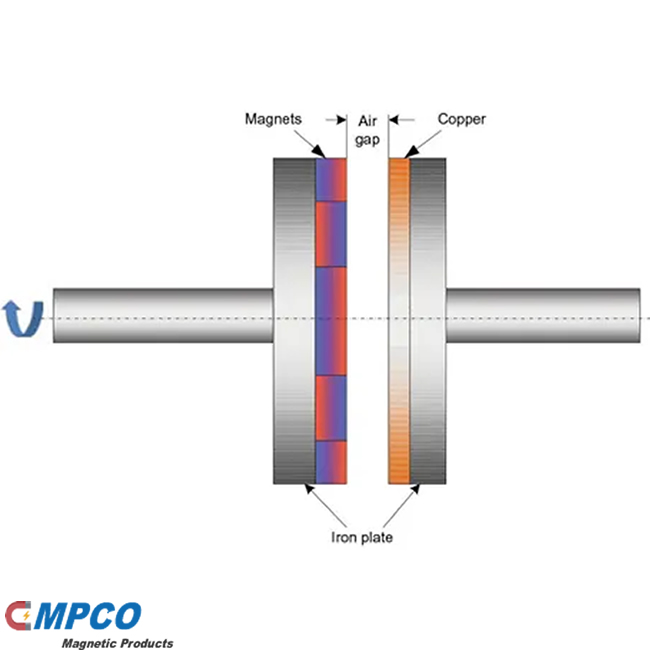
Non-contact Magnetic Disc Coupling Non-contact magnetic disc coupling has the characteristics of no mechanical contact, efficient drive, high efficiency and energy saving, simple maintenance, tolerance of large alignment error, long life, etc. It is a new technology that uses modern magnetism as the basic theory and uses the magnetic force generated by magnetic materials to [...]

  • Complete Guide OF Injection Molded NdFeB Magnets

Complete Guide OF Injection Molded NdFeB Magnets

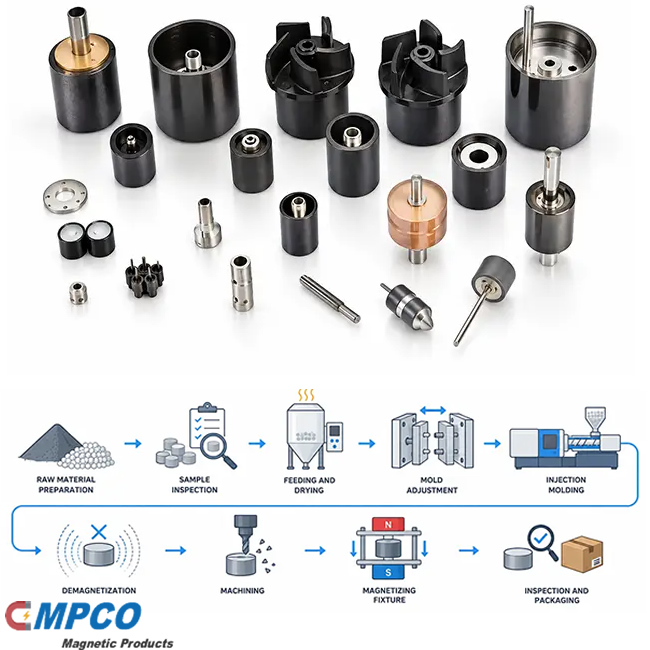
Complete Guide OF Injection Molded NdFeB Magnets NdFeB magnets are widely used because of their excellent magnetic performance. Among various molding methods, injection molding is an important process for producing complex structures and precision magnetic components. It combines magnetic powder with thermoplastic resin and uses injection molding equipment to form the product. This process combines [...]

  • Injection Molded vs. Sintered Ferrite Ring Magnets

Injection Molded vs. Sintered Ferrite Ring Magnets

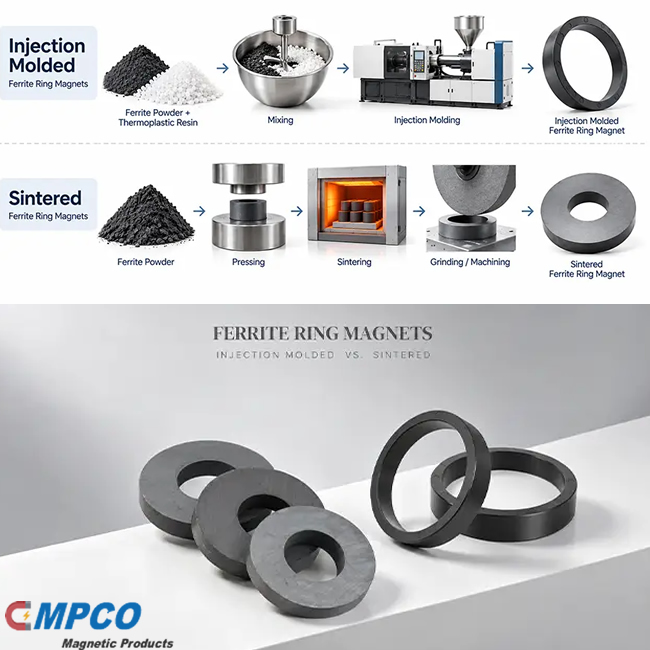
Injection Molded vs. Sintered Ferrite Ring Magnets Injection molded ferrite ring magnets and sintered ferrite ring magnets are both commonly used permanent magnet components in motors. However, they have clear differences due to their different manufacturing processes and material structures. In comparison, injection molded ferrite ring magnets focus more on design flexibility and production efficiency, [...]

By |October 18th, 2026|Ferrite Magnet, Home, Magnet Applications, Magnetic Industry, Magnetic Knowledge, Magnetic Materials, Magnetic Products, Magnetic Science, Motors, Separation Magnets, Sintered Ferrite Magnet|Comments Off on Injection Molded vs. Sintered Ferrite Ring Magnets
  • Injection Molded Ferrite Ring Magnets for Fan Motors

Injection Molded Ferrite Ring Magnets for Fan Motors

Injection Molded Ferrite Ring Magnets for Fan Motors Injection molded ferrite ring magntes are commonly used as permanent magnetic components in fan motor rotors. They are widely used in table fans, pedestal fans, wall fans, ceiling fans, and other fan motor products. Compared with other magnetic material solutions, injection molded ferrite rings offer advantages in [...]

By |October 16th, 2026|Ferrite Magnet, Home, Magnet Applications, Magnetic Industry, Magnetic Knowledge, Magnetic Materials, Magnetic Products, Magnetic Science, Motors, Separation Magnets, Sintered Ferrite Magnet|Comments Off on Injection Molded Ferrite Ring Magnets for Fan Motors
  • Wet Press vs Dry Press Ferrite Magnets

Wet Press vs Dry Press Ferrite Magnets

Wet Press vs Dry Press Ferrite Magnets Permanent ferrite magnets can be divided into two manufacturing processes based on their forming methods: wet pressing and dry pressing.The forming process not only affects the internal grain orientation and magnetic performance of ferrite magnets, but also influences production efficiency, dimensional control, and final application performance.Understanding the differences [...]

  • How to Identify the North and South Poles of Arc Magnets

How to Identify the North and South Poles of Arc Magnets?

How to Identify the North and South Poles of Arc Magnets? Arc magnets, also known as curved magnets or tile magnets, are one of the most widely used magnet types in motors. Their unique curved design allows them to fit the rotor or stator more effectively, making them an essential component in various motor applications. [...]

  • Magnet Temperature Limits Maximum Operating Temperature vs Curie Temperature

Magnet Temperature Limits: Maximum Operating Temperature vs Curie Temperature

Magnet Temperature Limits: Maximum Operating Temperature vs Curie Temperature Temperature is one of the key factors affecting the performance and reliability of permanent magnets. Beyond a certain temperature threshold, magnets may even undergo irreversible demagnetization. Therefore, understanding the temperature limitations of magnets is crucial when selecting suitable magnet materials for specific applications. When evaluating the [...]

  • Is Steel Magnetic

Is Steel Magnetic?

Is Steel Magnetic? Ever held a magnet up to different metal objects and wondered why it sticks to some but not others? Most steel IS magnetic because it contains iron—but not all steel behaves the same way around magnets. Some types like austenitic stainless steel (304, 316) won’t attract magnets at all, while carbon steel [...]

  • Can Copper Be Magnetised

Can Copper Be Magnetised

Can Copper Be Magnetised Pure copper cannot be permanently magnetized because it is a diamagnetic material with paired electrons that repel magnetic fields. Copper is different from iron or nickel because it doesn’t have the atomic structure needed for ferromagnetism or permanent magnetism. Let me clear something up right away. If you’re picturing a copper [...]

error: Content is protected !!