

How are cylinder magnets made?
Choosing the right magnet shape affects your project’s success. Cylinder magnets offer unique advantages but require specific manufacturing processes. Understanding how these magnetic cylinders are created helps you make better decisions for your applications.
Cylinder magnets are manufactured through powder metallurgy, where rare earth materials are pressed into cylindrical molds, sintered at high temperatures, and then magnetized. The process involves mixing neodymium, iron, and boron powders, compacting them under pressure, heat treatment at 1000-1100°C, machining to precise dimensions, and final magnetization using strong electromagnetic fields.
The manufacturing of magnetic cylinder units involves several critical stages that determine their final performance and quality. M-Magnet employs advanced production techniques to ensure consistent results across different cylinder specifications.
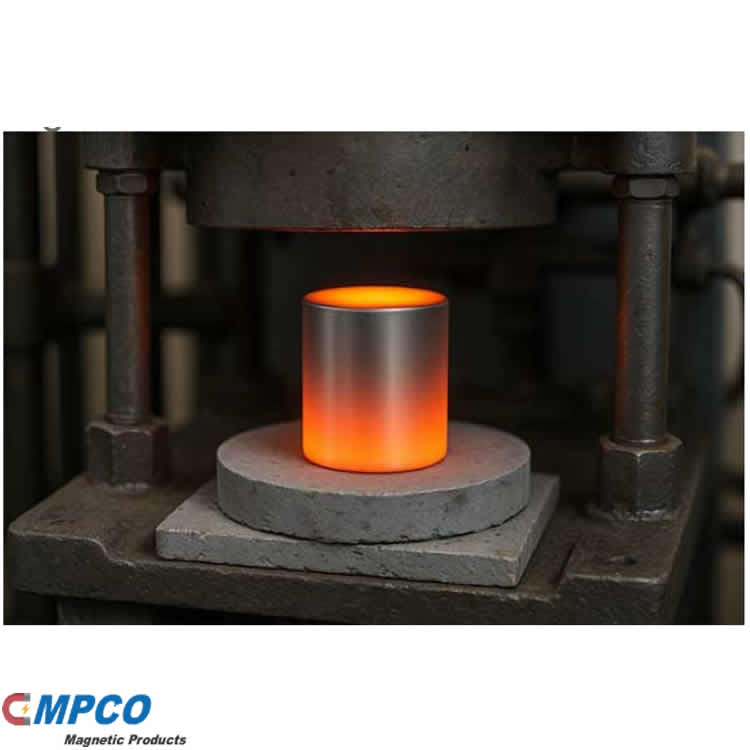
How are cylinder magnets made
Raw Material Preparation
The process begins with preparing high-purity raw materials. Neodymium, iron, and boron elements are combined in specific ratios to achieve the desired magnetic properties. The quality of these base materials directly impacts the final magnet’s strength and durability. Manufacturers must maintain strict quality control during this initial phase to prevent contamination.
The alloy composition typically consists of approximately 30% neodymium, 65% iron, and 5% boron by weight. Additional elements like dysprosium or terbium may be added to enhance temperature resistance. These materials undergo vacuum melting to create a homogeneous alloy ingot.
Powder Production and Processing
The alloy ingot is crushed and milled into fine powder using jet milling or ball milling techniques. This powder typically measures 3-5 micrometers in diameter. The milling process occurs in an inert atmosphere to prevent oxidation of the reactive rare earth materials.
Particle size distribution plays crucial roles in achieving optimal magnetic properties. Uniform powder ensures consistent density throughout the final magnetic cylinder. The powder is then mixed with binding agents to improve handling during subsequent processing steps.
Manufacturing Stage Temperature (°C) Duration Atmosphere
Powder Preparation Room Temperature 2-4 hours Inert Gas
Pressing Room Temperature 5-10 minutes Magnetic Field
Sintering 1000-1100 4-6 hours Vacuum
Tempering 500-650 2-3 hours Vacuum
Pressing and Alignment
The powder is placed into cylindrical molds and subjected to high pressure, typically 200-400 MPa. During this pressing stage, a strong magnetic field aligns the powder particles to create the desired magnetic orientation. This alignment step is crucial for achieving maximum magnetic performance in the finished cylinder.
The pressing operation must be carefully controlled to ensure uniform density throughout the cylinder. Variations in density can lead to cracks or weak spots in the final product. The molds are designed with precise tolerances to accommodate shrinkage during subsequent sintering.
Sintering and Heat Treatment
The pressed cylinders undergo sintering in vacuum furnaces at temperatures between 1000-1100°C. This high-temperature process bonds the powder particles together, creating a solid, dense magnetic cylinder. The sintering atmosphere must be carefully controlled to prevent oxidation and maintain material purity.
Following sintering, the cylinders receive tempering treatment at lower temperatures (500-650°C) to optimize their magnetic properties. This tempering process helps relieve internal stresses and improves the magnet’s coercivity. The cooling rate during this stage affects the final microstructure and magnetic performance.
Machining and Finishing
After heat treatment, the cylinders are machined to achieve precise dimensions and surface finishes. Diamond grinding wheels are typically used due to the hardness of sintered neodymium material. This machining step removes any surface irregularities and brings the cylinders to their final specifications.
Quality control measures include dimensional inspection, surface roughness measurement, and visual examination for defects. Custom applications may require additional machining operations such as drilling holes or creating special surface features.
Magnetization Process
The final manufacturing step involves magnetizing the cylinders using powerful electromagnetic coils. The magnetization process requires applying magnetic fields several times stronger than the magnet’s final operating field. This step gives the cylinder its permanent magnetic properties.
How to make a cylindrical magnet? The magnetization direction can be axial (through the cylinder’s length) or diametral (across the diameter), depending on the intended application. The magnetization equipment must be capable of generating uniform fields to ensure consistent magnetic performance throughout the cylinder.
Quality Assurance and Testing
Each batch of magnetic cylinders undergoes comprehensive testing to verify their magnetic properties, dimensional accuracy, and surface quality. Tests include measurement of magnetic flux density, coercivity, and maximum energy product. These parameters determine how well the magnets will perform in their intended applications.
Temperature stability testing ensures the cylinders maintain their magnetic properties under various operating conditions. M-Magnet implements rigorous quality control procedures to guarantee that every magnetic cylinder meets specified requirements before shipment to customers worldwide.
