

N52 Neodymium Magnets
N52 magnets are an excellent choice for applications requiring a strong, permanent magnetic field in a compact package. They represent the cutting edge of neodymium magnet technology and offer substantial holding force and magnetic capability where space and weight are limited. Our N52 magnets provide exceptional holding power, making them indispensable for complex industrial machinery, advanced therapeutic devices, and cutting-edge research equipment.
N52 Magnets Definition
N52 magnet is a type of neodymium magnet, stands out for its exceptional strength. The “N” stands for neodymium, while “52” represents the magnet’s maximum energy product, denoted as (BH)Max, measures 52 Mega-Gauss Oersteds (MGOe), classifying it among the strongest magnets available commercially.

N52 Neodymium Magnets
Magnetic Properties of N52 Magnets
Magnetic properties are fundamental to understanding the suitability of N52 magnets for various applications. Here are the key properties and how they relate to the performance of N52 magnets:
Magnetic Strength: This refers to the maximum strength the magnet can achieve. For N52 magnets, this is the highest available for neodymium magnets, and they can produce an incredibly strong magnetic field. This high magnetic strength makes them suitable for applications that require a powerful, compact magnet.
Remanence (Br): Also known as residual magnetism, remanence is the magnetic field in the magnet in a closed circuit. For N52 magnets, the Br is typically between 1.4 and 1.5 Tesla, which is exceptionally high and signifies that the magnet can hold a significant amount of magnetic energy.
Coercivity (Hci): Coercivity measures a magnet’s resistance to becoming demagnetized by an external magnetic field. N52 magnets exhibit high coercivity, often above 12 kOe (kilo Oersted). This means they can maintain their magnetism even in adverse conditions, such as in the presence of other magnetic fields or when heated (up to their maximum operating temperature).
Maximum Energy Product (BH max): This is the maximum magnetic energy density the magnet can store. N52 magnets have a maximum energy product of about 52 MGOe, which means they can store much energy relative to their size. This high-energy product makes N52 magnets one of the most powerful neodymium magnets, suited for high-performance applications.
These magnetic properties combined are what make N52 magnets so valuable in advanced technologies and heavy-duty applications. With a high remanence, they can exert strong attractive or repulsive forces, beneficial for holding applications or actuation mechanisms. Their high coercivity allows them to function reliably even when exposed to other magnetic fields or certain levels of heat (though it’s important to note that neodymium magnets generally have a lower maximum operating temperature compared to other types of magnets, such as samarium cobalt).
Dimensions and Shapes of N52 Magnets
N52 magnets can be manufactured in various sizes and shapes, each lending to specific applications based on how the shape impacts the magnetic field lines and force distribution. Here are some common forms, along with considerations for their dimensions:
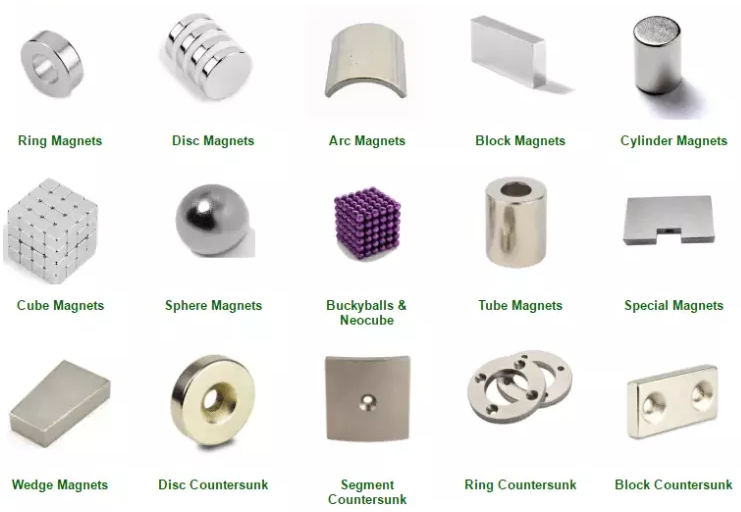
Discs/Cylinders: These are flat, round magnets with a height often less than the diameter. They are used in jewelry, packaging, and various closures. The larger the diameter, the stronger the magnetic field at the surface, but the pull force will also depend on the height or thickness.
Blocks/Rectangles: These are solid, three-dimensional magnets with length, width, and height. They are commonly used in mounting, sensors, and holding applications. The magnetic force of block magnets generally increases with size; larger blocks provide greater pull force.
Rings: Ring magnets have a central hole and are often used in loudspeakers, magnetic bearings, and coupling systems. The outer diameter versus inner diameter ratio and the thickness can greatly affect how the magnetic field lines concentrate.
Spheres: Less common due to their more complex manufacturing process and the fact that they have a more isotropic field (the same in all directions). Sphere-shaped magnets are often used for educational purposes or artistic installations.
Arcs/Segments: These magnets are segment-shaped or part of a ring and are often used in electric motors, generators, and magnetic bearings. Their curved shape concentrates the magnetic field along the arc.
Cubes: Like blocks but with equal dimensions on all sides, cube magnets have a symmetric field and are often used in magnetic puzzles, educational settings, and clamping applications.
The dimensions of a magnet significantly affect its strength and application:
Surface Area: A larger surface area typically means a larger contact area and a stronger pull force when the magnet is attached to a metal object.
Volume and Mass: Generally, the larger the magnet’s volume (and thus, its mass), the more magnetic material is present, which usually results in a stronger overall magnetic field.
Shape: Certain shapes direct the magnetic field in specific ways. For example, ring magnets can concentrate the field on the central hole, while block magnets have a more evenly distributed magnetic field.
Aspect Ratio: The ratio between different magnet dimensions (e.g., diameter-to-height for discs) influences how the magnetic field projects from the magnet. A disc with a small diameter-to-height ratio may have a concentrated field at a single pole, whereas a disc with a larger ratio will have a field that projects further outward.
When selecting the size and shape of an N52 magnet for a particular application, one must consider both the magnetic requirements (strength, polarity, field shape) and the physical constraints (space, attachment method, weight). Manufacturers can often provide guidance or even custom magnets to meet specific needs.
Coatings and Durability for N52 Magnets
N52 magnets, like most neodymium magnets, are inherently prone to corrosion due to their high iron content. These magnets are usually coated with a protective layer to mitigate this issue and improve their durability. Several coatings are commonly used, each providing different levels of protection, durability, and aesthetic appeal.
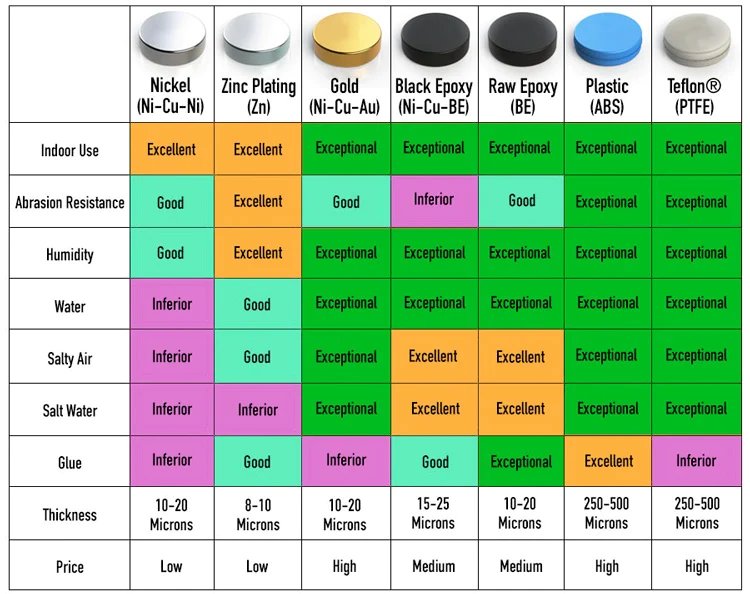
Nickel Plating (Ni-Cu-Ni): Nickel is one of the most common coatings for neodymium magnets. The magnet is first plated with a layer of copper, then nickel, and sometimes followed by another outer layer of nickel. This triple-layer coating protects against corrosion and has a shiny, silvery appearance. It is a cost-effective coating that adequately protects against humidity and wear for general purposes.
Zinc Coating: Zinc is a cheaper alternative to nickel and provides reasonable protection against corrosion. It has a blue-ish, bright finish. Zinc-coated magnets are suitable for many applications, though they might not be as durable as nickel-plated ones in high-humidity or marine environments.
Epoxy Coating: An epoxy coating, which may be applied over nickel plating, offers superior protection against harsh environmental conditions and is suitable for outdoor use. It typically has a black finish and provides excellent resistance to moisture and abrasion.
Gold Plating (Ni-Cu-Ni-Au): Gold plating usually follows the same process as nickel plating but with an additional outer layer of gold. Gold is highly resistant to oxidation and creates an attractive finish. It is ideal for applications where a decorative appearance is desired and provides excellent protection against corrosion.
Teflon (PTFE) Coating: Teflon coatings are not as common but can be used when a non-stick surface is necessary. They also provide good protection against corrosion and endure high-friction environments.
Rubber Coating: A protective layer of rubber adds corrosion resistance and provides impact resistance, reducing the chance of chipping or cracking if the magnet is handled roughly.
The coating does more than protect against corrosion; it can also affect the magnetic performance of the magnet. Though coatings are generally thin, they can slightly decrease the magnetic force because they increase the distance between the magnet’s surface and the item it attracts.
When selecting a coated N52 magnet, consider the environment in which the magnet will operate. An epoxy or multiple coatings might be necessary for harsh conditions, such as outdoor use or near saltwater. Gold or nickel coatings offer a shiny and attractive finish for appearance-sensitive applications. The right coating ensures the magnet maintains its performance and longevity for its intended application.

Applications of N52 Magnets
N52 Neodymium Magnets, known for their high strength-to-size ratio, are used in various applications across various industries. Here are some of the key applications:
Magnetic Coupling: Magnetic couplings are permanent-magnetic couplings that transmit the torque between two magnetic rotors (with magnets) without contact by magnetic forces. Therefore, the magnetic strength of the coupling magnet becomes the key. And N52 is the best choice.
Magnetic Crawlers: A magnetic crawler is a device designed to move over the surface of a material using the force of magnetism. It consists of a motor, a large neodymium magnet (N52 in most cases), and a flexible belt that moves over the material’s surface.
Medical Equipment: The N52 Neodymium Magnet is a medical-grade magnet that can be used in various applications. These include use in surgical instruments, medical implants, and other devices requiring strong magnetic forces. Most micro neodymium magnets used in minimally invasive surgery are N52.
Industrial Applications: N52 magnets are used in various industrial applications where a small magnet must be strong enough to hold an object to its surface tightly. They are used in magnetic separators, filters, ionizers, and in producing on-off buttons and safety and security systems.
Electronics: In information technology, neodymium magnets are used in hard disc drives, mobile phones, and audio and video systems of televisions. They are also used in antilock braking systems and to mount small trackers on vehicles.
Healthcare: Neodymium magnets are incorporated into medical devices for arthritis, wound healing, insomnia, headache, and several other diseases due to their ability to generate a static magnetic field. They are also used in the production of baby strollers that are attached to carriers via magnets.
DIY Projects and Household Use: N52 magnets, such as knife racks, magnetic spice racks, and other wall-mounted storage and organization solutions, are used in DIY projects. They can hold curtains securely, keep pets and children out of cabinets, replace broken latches, and even create specialty DIY items such as scrubbers for cleaning aquarium tanks or clothing zippers.
Automotive and Aerospace Industries: Due to their high magnetic strength, these magnets are used in motors and generators in the automotive industry. In the aerospace industry, they are used in satellites, rockets, and airplanes because of their compact size and high magnetic force.
Scientific Applications: N52 Magnets are used in Magnetic Stirrers, which scientists use to keep mixtures clean and prevent them from becoming contaminated.
Jewelry and Fashion: They are used in jewelry clips, identification badges, and garment closures.
Renewable Energy: Neodymium magnets are also used in the renewable energy sector, particularly in manufacturing wind turbines.
Disc Round Strong Permanent N54 Neodymium Magnet D70 x 40mm
Bread Type Laminated Magnet N50UH Fits Electric Motors and Generators
Arc Laminated Segmented Neodymium Magnet N50H Passivation
N54 Lamination Permanent Magnet to reduce Eddy Current Loss
N52 D5*1.5MM Water Drop Wheel Magnets
Zinc N52 Neodymium Custom Shaped Magnet Runway with Gap
