

A Guide to the Alnico Magnet Recycling Process
Hidden within every discarded Alnico magnet lies valuable metals worth recovering. These permanent magnets contain cobalt and nickel, two strategically significant rare metals with high market value and increasingly tight global supply chains. The metals in these magnets represent significant economic value that is often discarded.
Environmental concerns make Alnico magnet recycling crucial. When these magnets end up in landfills, their metal components can leach into soil and groundwater. Cobalt and nickel contamination causes long-term ecological damage. Scientific recycling processes avert this hazard while recovering materials otherwise requiring energy-intensive mining operations.
The economic case for recycling is equally compelling. Standardized recycling programs can reduce raw material costs by 30% to 50% compared to buying virgin metals. This cost reduction supports circular economy principles and demonstrates corporate social responsibility. As global cobalt supplies tighten and prices remain high, recovering these metals from waste becomes not only environmentally responsible but also financially strategic for sustainable manufacturing.
Key Stages in the Alnico Magnet Recycling Process?
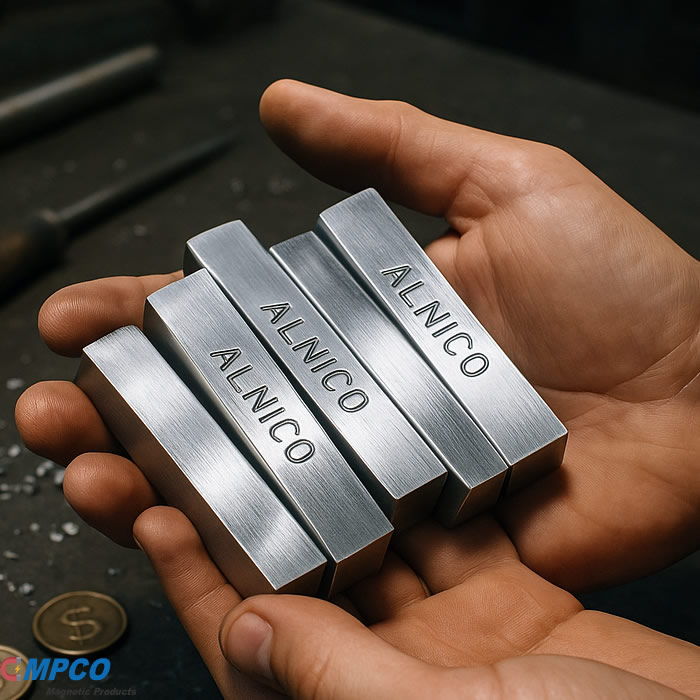
Hands holding shiny, freshly processed Alnico metal pieces under bright workshop lights with monetary symbols nearby
The Alnico magnet recycling process is a well-established technological approach that involves precise coordination across several processing stages. This systematic procedure transforms end-of-life magnets containing aluminum, nickel, and cobalt into recoverable raw materials while maintaining high recovery rates when proper protocols are followed throughout each phase.
A Guide to the Alnico Magnet Recycling Process
Pretreatment Stage
Pretreatment begins with preliminary classification to separate Alnico magnets from other magnetic materials. Workers remove protective shells and plastic coatings that often surround industrial magnets. This initial cleaning prevents contamination during later processing steps.
The classified magnets undergo crushing using specialized equipment designed for magnetic materials. The crushing equipment converts whole magnets into fine particles with controlled size distribution, facilitating more efficient separation in subsequent processing stages.
Quality control during pretreatment directly impacts the effectiveness of downstream processes. Contaminated magnets require additional cleaning steps that increase processing costs. Facilities must balance throughput speed with contamination removal to optimize operational efficiency.
Physical Sorting Stage
Physical sorting employs magnetic separation technology to isolate ferrous materials from non-magnetic components. Magnetic separation systems use powerful electromagnets to attract iron-containing particles, creating distinct material streams based on magnetic properties.
Gravity sorting complements magnetic separation by utilizing density differences between materials. Advanced gravity separation systems can achieve high purity levels for individual metal components. The combined approach significantly improves the quality of recovered metals.
These physical sorting methods reduce the complexity of subsequent metallurgical treatment. Higher purity feedstock requires less intensive processing to achieve target specifications. The sorting stage serves as a critical quality gate before expensive extraction procedures.
Metal Extraction Methods
Metal extraction from sorted Alnico materials follows two primary technological routes. Each method offers distinct advantages depending on processing scale and target metal purity requirements. Facilities often combine both approaches to maximize overall recovery efficiency.
High-temperature smelting is the preferred method for large-scale Alnico recycling operations. This pyrometallurgical process exploits different melting points to separate constituent metals through layered extraction, allowing for significant volume processing while maintaining acceptable recovery rates for cobalt and nickel.
Hydrometallurgy provides superior control for extracting high-purity metals from Alnico feedstock. Acid leaching dissolves target metals into solution, where selective precipitation or electrodeposition recovers individual components. This wet processing approach achieves exceptional purity levels suitable for demanding applications.
Environmental compliance remains essential throughout all extraction processes. Waste treatment systems must handle byproducts from both smelting and hydrometallurgical operations. Proper waste management prevents secondary pollution while supporting sustainable recycling practices.
The choice between extraction methods depends on several operational factors, including processing volume, target metal specifications, and available infrastructure. Many facilities implement hybrid approaches that leverage the strengths of both extraction routes.
Triangular Bar PTFE ALNICO V MAGNET
X Shape Magnet Stir Bar Alnico
AlNiCo5 Cylinder Cow Magnet with Curved Ends
Solid Alnico Blcok Bar Cow Magnet
AlNiCo3 Cylinder Rod Cow Magnet
AlNiCo 3 Cylindrical Rod Cow AlNiCo Rumen Magnet
Stainless Steel Round Edge Protect Cow Stomach Alnico Magnet
